Wednesday, June 30, 2010

20% OFF SELECT MERCHANDISE

Summer Sizzling Sale Thru July 5th

20% OFF Select Merchandise

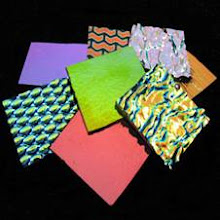
Includes Kilns, Aanraku Bails, CBS Dichroic, Duncan Dichoric Glass, Dichroic Scrap & Dichroic Samplers

BUY TODAY!!!!! http://www.dichroicandmore.com

Thursday, May 20, 2010

$10 Off Sale at DichroicAndMore.com

$10 Off any purchase over $80 now through June 30, 2010. Visit www.DichroicAndMore.com and enter the coupon code Fusion at checkout!

Thursday, May 6, 2010

20% OFF Mother's Day Sale at DichroicAndMore.com!

DichroicandMore.com is having a Mother's Day sale!

On Sunday, May 9th save 20% off Paragon, Jen Ken and AIM Kilns, Dichroic Glass Scrap, Aanraku Bails, Dicro Slide, CBS Dichroic Glass and More!!

Visit DichroicandMore.com today!

Thursday, February 4, 2010

10% Sale at DichroicAndMore.com

Stock up on your warm glass supplies - Aanraku Bails, CBS Dichroic, Dichroic Scrap, Kilns and more!!

DichroicandMore.com is having a Valentine's Day Sale just for you! Enter coupon code HEART for 10% off your entire order. Sales runs 2/4/10 through 2/14/10.

Happy Shopping! Visit DichroicandMore.com today!

Tuesday, October 27, 2009

Price Buster Sale for Glass Fusing Supplies

Price Buster Sale Now Going On!!

Kilns, Dichroic Glass, & Aanraku Bails.

Visit DichroicandMore.com & Dicromart.com today!

Wednesday, September 30, 2009

Glass Fusing Glossary Terms

Glass Fusing Glossary Terms

Here is a list of some of the terms used in Glass Fusing. In future Blogs, we will expand this list.

Annealing - The process of cooling slowly a piece of heated glass to remove internal stress.
This is done between 1000 down to 600 degrees Fahrenheit

Art Glass - Colored glass used in glass fusing and stained glass


Bails – Arched hooplike pieces that are attached to glass pieces, allowing you to hang the glass piece on a chain or link it to another object.

Blank - A solid bottom layer of glass on which other pieces of glass are placed and positioned prior to fusing

Casting - The process of melting and pouring frit or molten glass into a mold to achieve a particular shape

Coefficient of Expansion (COE) - The measured expansion of heated glass

Cold Working – Working with sanding, grinding, drilling, or sandblasting to change the Art Glass in its natural state.

Combing – Heated glass in a liquid state is manipulated by pulling or "combing" a blunt point through the surface

Confetti – Thin shard of glass used to add shading and design

Devitrification - A crystalline substance growth that appears as a dull finish or scum on the surface of some glasses when heated to above 1000 degrees F.

Fiber Paper - A blanket type of thin ceramic fiber used to protect a kiln shelf or mold in fusing. Often used for making channels

Firing Schedule - Details of the times and rates of heating, soaking and cooling during a particular firing cycle.

Fire Polish - Heating glass to the point where the edges round slightly and the surface has a glossy, wet appearance. Often used as a technique to retain a shiny surface to glass after it has been ground or sandblasted

Float Glass - Commonly known as window glass.

Frit - Small granules of glass that has been broken or ground in pieces ranging from fine powder to fine, medium, or coarse.

Full Fuse – Heating and melting two or more pieces of glass into one single piece of glass.

Furniture - Various posts and shelving used to support and separate the glass within the kiln.

Fuse - Heat bonding pieces of glass together.

Fused Glass - Refers to specially designed glass that has been fused or melted together in a kiln

Kiln – Thermally insulated chambers, usually made out of fire bricks

Kiln Wash – This is a refractory powder that can be mixed with water and painted on kilns, kiln shelves and molds to prevent glass and accidental glaze drips from sticking.

Lamp Work - any glass working technique done using the direct flame of a torch.

Mold - Used for glass slumping, and fusing. They can be used to make jewelry, plates, bowls, etc. They come in a variety of shapes and sizes in which glass can be shaped by slumping into or over.

Pate'-de-verre - A frit casting technique; a paste of powered frit is placed and spread in a mold and heated to the point where the individual granules fuse into a solid mass.

Peep Hole - Small hole(s) in a kiln designed for viewing the contents of the kiln chamber.

Pyrometer - A high-temperature thermometer hike device that measures the heat inside a kiln

Sagging - When heated glass starts to soften, it slumps and sags under its own weight.

Slumping - A Technique of heating glass and shaping it over or into a mold.

Soak - Holding glass at a particular steady temperature for a given period of time

Thermal Shock - Glass breakage caused by rapid or uneven heating or cooling.

Thermocouple - The temperature sensing probe of a pyrometer. It's inserted into the kiln to measure temperature

Please check out our web site, www.DichroicAndMore.com, for great values on Fused Glass Supplies

What is dichroic glass and why is it so special?

What is dichroic glass and why is it so special?

The word "dichroic", pronounced Dye-Cro-Ick, is derived from two Greek roots, "di" for two and "chroma" for color. So "dichroic" literally means "two-colored." You may sometimes hear dichroic glass referred to as "dichro" for short.

Dichroic Glass is one of the hottest materials being used by glass artisans today. It is an amazing material originally developed for the aerospace industry in the 1950's and 1960's when NASA, defense contractors,and the Department of Defense developed this high-tech material for use as optical filters, as a shield against cosmic radiation and many other uses. In recent years, Dichroic has been discovered by glass artists.

Dichroic is defined in the dictionary as “The property of a surface of reflecting light of one color and transmitting light of other colors.” Transmitted colors are what you see when you would look through a piece Dichroic Glass. Reflected colors are the colors you see when you hold the glass at an angle, and will be the opposite color of the transmission.

Dichroic Glass coatings are produced by using a vacuum deposition process to add multiple thin layers of various metallic oxides on top of the glass. This creates an optical filter that can selectively reflect and transmit wavelengths of light. The glass is also rotated in the vacuum chamber through the vaporization process in order to deposit uniform coatings on the glass.

A misconception is that dichroic glass is the same as fused glass or refers to the entire fused glass movement. Though fused glass or warm glass may incorporate dichroic glass elements; doing so is not a requirement. Dichroic glass is very popular and often used as an element in glass fusing. It can also be used in glass blowing and bead making.

Glass Artists love to incorporate Dichroic Glass in their jewelry making because Dichroic adds flash, pizzazz, sparkle, and intrigue to a finished jewelry piece,

In jewelry, Dichroic Glass is often formed into pendants, earrings, bracelets and beads. Dichroic Glass is also very popular in magnets, tiles, and drawer pulls.

DichroicAndMore.com has a wide selection of Dichroic Glass available for the Glass Artist.